What 'Biodegradable' Actually Means (And What It Doesn't)
The label is on everything. The standards behind it are almost nonexistent.
Quick question: do you read product labels? Most people would say yes. But when they see "biodegradable" on a bottle, they stop reading. The word does the work that a full ingredient list would otherwise have to do. And brands know it.
The EU Commission found that 42% of green claims made online couldn't be verified or were outright false. Of those examined, roughly 40% lacked any supporting evidence. "Biodegradable" is the most common of all these claims — and among the least regulated.
The technical definition — and why it's nearly useless
Biodegradable means a material can be broken down by microorganisms — bacteria, fungi, algae — into water, carbon dioxide, and biomass. That's the complete definition. It says nothing about how long it takes, what conditions it requires, or whether those conditions exist anywhere in the real world.
A plastic bag is technically biodegradable. It decomposes in roughly 500 years. An apple core takes about two months. Both receive the same label. The word describes a process category, not an outcome.
The real cost of believing the label
Every year households buy based on unverified "biodegradable" claims, synthetic surfactants from conventional cleaners accumulate in local waterways. Laundry pod membranes — marketed as dissolvable — fail to fully dissolve in wastewater treatment and steadily add micro-plastic load to freshwater systems. The cost isn't hypothetical. It's accumulating right now.
When you see "biodegradable" on a label, ask three specific questions: How long does it take? Under what conditions — soil, water, industrial compost? Is there a third-party certification — MADE SAFE, Cradle to Cradle, EWG Verified — to back the claim?
What genuinely biodegradable looks like
Some products do clear the bar. Meliora Laundry Powder is composed entirely of baking soda, washing soda, and vegetable soap — three ingredients that fully biodegrade in wash water during every cycle. No membranes, no optical brighteners, no PVA micro-plastics. What enters your machine exits your system as compost-safe material.
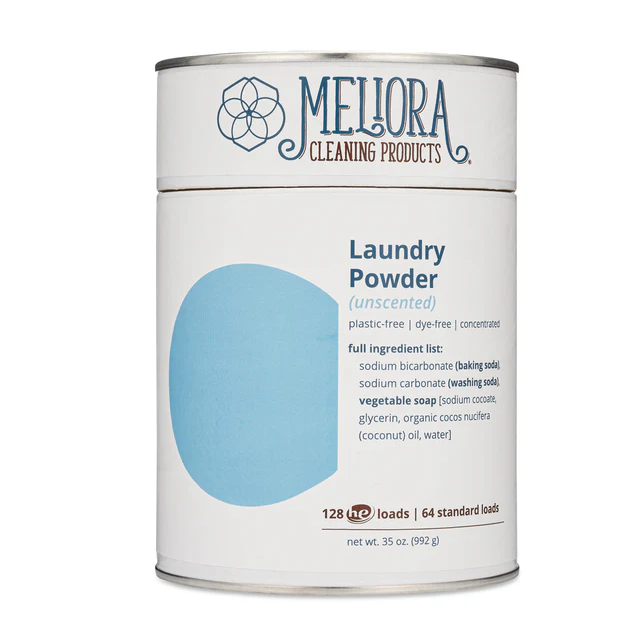
Laundry Powder
Meliora Laundry Powder lists three ingredients — the full list. No proprietary fragrance blends, no petroleum derivatives. Certified MADE SAFE, B Corp, and Leaping Bunny. $19 for a canister covering two to three months for most households.
Certifications that mean something
MADE SAFE certifies that every ingredient has been screened against a database of known harmful substances. EWG Verified requires full ingredient disclosure plus safety data. EPA Safer Choice evaluates environmental fate — what happens to a formula after it goes down the drain. These aren't marketing designations. They're third-party audits with published criteria.
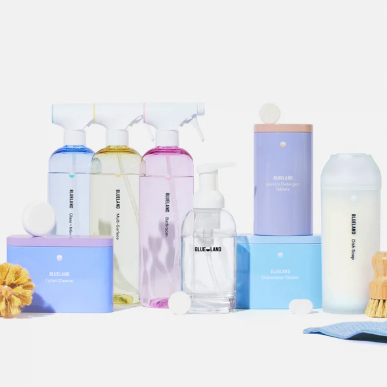
The Clean Suite Kit
Blueland's Clean Suite holds MADE SAFE, EWG Verified, Cradle to Cradle, and EPA Safer Choice simultaneously — a combination fewer than 1% of cleaning brands achieve. The tablets dissolve completely in tap water, leaving no solvents, no preservatives, no plastic residue.
What honest claims look like
"Biodegradable" as a standalone claim is almost always insufficient. "Fully biodegradable in household water conditions, verified by MADE SAFE — here are our three ingredients" is what honesty looks like. The brands worth trusting don't just put the label on the bottle. They put the certification body's name on it, because they passed the audit and they want you to check.
Honesty about materials is more useful than poetry about the planet. The brands worth trusting show you both.