Building a Refill Routine That Sticks
Most refill habits die before the second refill. Here's the environment design that makes one actually stick.
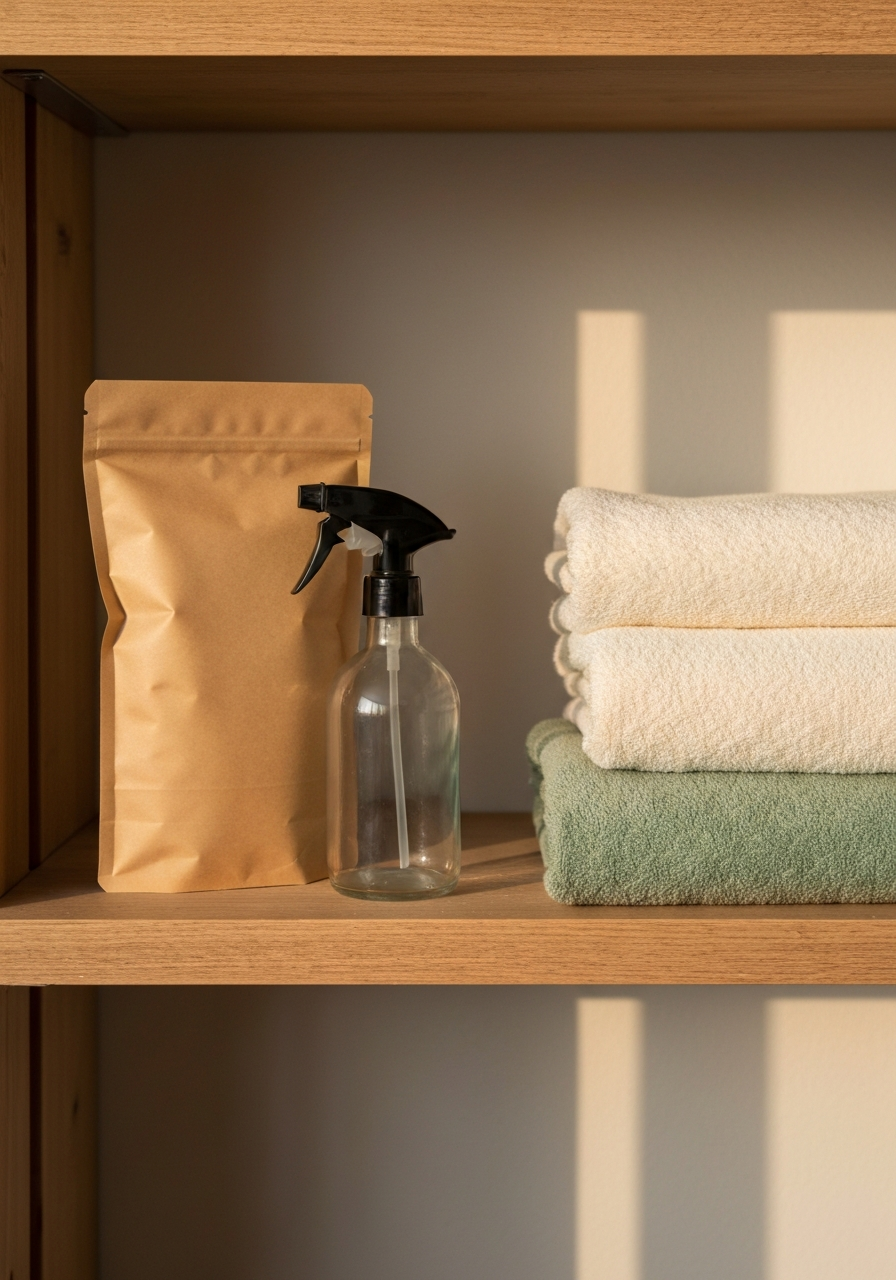
Quick math: the average household spends around $300 a year on cleaning products. About two-thirds goes to laundry. The rest goes to spray bottles for every surface — kitchen, bathroom, glass — which are mostly water, mostly plastic, and mostly gone within a few months. The refill model cuts that number significantly. But only if the habit actually sticks.
Why most refill systems fail
They require too much conscious effort to maintain. You have to remember to order, wait for delivery, find where you stored the refills, and start the cycle again. Habits fail not because people lack commitment — they fail because the friction is just slightly too high to survive a busy week.
The solution isn't more motivation. It's smarter environment design. Two products make that almost effortless.
The financial case, specifically
A leading conventional detergent runs roughly $0.40–$0.50 per load. Meliora Laundry Powder costs $19 and covers 64 loads — about $0.30 per load, with three ingredients you can actually name. Over a year of laundry for a two-person household, that's roughly $10–15 saved on detergent alone. Small individually, but it compounds across every cleaning category you consolidate.
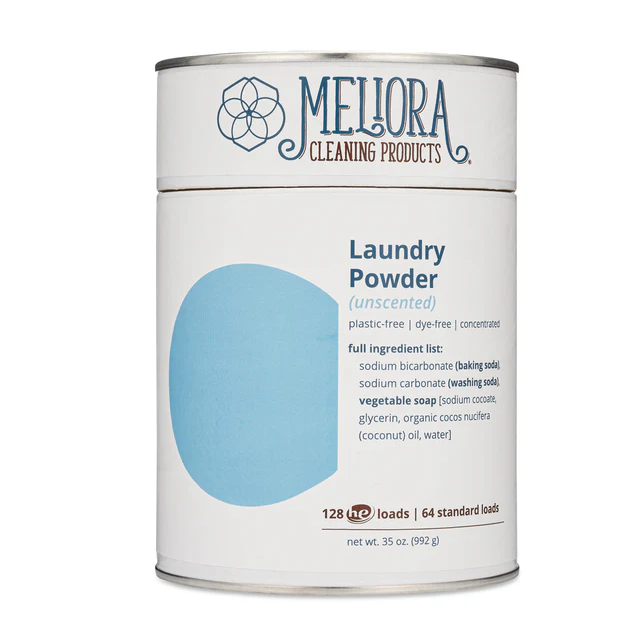
Laundry Powder
Meliora Laundry Powder: baking soda, washing soda, vegetable soap — that's the full ingredient list. $19, 64 loads. Certified MADE SAFE and B Corp. No optical brighteners, no synthetic fragrance, no PVA micro-plastic membrane going down your drain.
Consolidating the cleaning cabinet
The other half of the household cleaning budget — sprays, bathroom cleaner, glass cleaner, dish soap — tends to be six separate plastic bottles with six different formulas and six different purchase cycles. Blueland's Clean Suite replaces all of them: reusable Tritan bottles, dry tablets that dissolve in tap water, tablet refills shipped in compostable paper. The $79 starter kit eliminates the repurchase cycle for all four product categories.
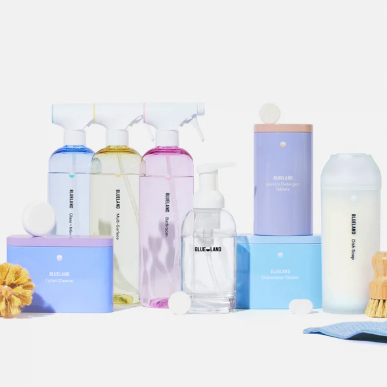
The Clean Suite Kit
Blueland The Clean Suite ($79): all-purpose, bathroom, glass, and hand soap in four reusable bottles. Refill tablets ship in compostable paper. Blueland has diverted over 1 billion single-use plastic bottles since 2019. Certified B Corp, MADE SAFE, Cradle to Cradle, EWG Verified.
The habit that locks it in
The fastest path from "I should do this" to "I do this automatically" is habit stacking: attaching the new behavior to something you already do without thinking. Set a recurring reminder to check your supply levels monthly. The first time you run low on a refill product is the moment you order the next one — not three days later when you've actually run out.
Place refills where you use them, not where you store them. Detergent powder on top of or next to the washing machine. Blueland tablets in the cabinet where the bottles live. Proximity is the most reliable habit cue — it beats intention every time.
Three signals your routine has locked in
First: you stop thinking about it. The scoop goes into the drum as automatically as closing the lid. Second: you notice when you're running low before you've run out. Third: the refill arriving feels like your pantry restocking itself — not like a package you have to deal with.
A refill routine that sticks isn't built on discipline. It's built on a system where the right choice is also the easiest one.